 06 47 6867 72

Zoekfilters
› Daniela Hofmann (4)
› Johannes Müller (4)
› Mykhailo Videiko (4)
» Toon alle opties (73)
› Stanislav Ţerna (4)
› Vitalii Rud (4)
› Wiebke Kirleis (4)
› Gerrit Dusseldorp (3)
› Alain Queffelec (2)
› Alex Brandsen (2)
› Amy Richardson (2)
› Anna Reeve (2)
› Annemarieke Willemsen (2)
› Antonio Blanco-Gonzál... (2)
› Artur Ribeiro (2)
› B.J.L. Van den Bercken (2)
› Ben van den Bercken (2)
› Birgit Mershen (2)
› Christof Paulus (2)
› Claudia Glatz (2)
› Claudia Theune (2)
› Corrie Bakels (2)
› Dennis Harding (2)
› Devi Taelman (2)
› Dina Serova (2)
› Doris Mischka (2)
› Erik Drenth (2)
› Eva Alarcón-García (2)
› Hanneke Kik (2)
› Ilia Heit (2)
› Irini Biezeveld (2)
› Jaap Beuker (2)
› Jitte Waagen (2)
› Joanna Ostapkowicz (2)
› Josephine Kanditt (2)
› Kata Furholt (2)
› Kjetil Loftsgarden (2)
› Klaus Hirsch (2)
› Konrad Ott (2)
› Kristina Franke (2)
› L. Petersen (2)
› Lindy Crewe (2)
› Loren Cowin (2)
› Margaux Depaermentier (2)
› Marie Soressi (2)
› Marie Ødegaard (2)
› Martin Furholt (2)
› Martin Kehl (2)
› Martin Segschneider (2)
› Mathias Bjørnevad-Ahl... (2)
› Michael Kempf (2)
› Michael Seymour (2)
› Michaela Harbeck (2)
› Moritz Mennenga (2)
› Moslem Mishmastnehi (2)
› Mónica Palmero Ferná... (2)
› Nima Nezafati (2)
› Patricia Fall (2)
› Philip Verhagen (2)
› Reinhard Bernbeck (2)
› Ronald Visser (2)
› Rune Iversen (2)
› Ruud Stelten (2)
› Setareh Ebrahimiabareg... (2)
› Shumon Hussain (2)
› Silvia Kutscher (2)
› Silviane Scharl (2)
› Stephanie Döpper (2)
› Steven Falconer (2)
› Susan Pollock (2)
› Thomas Kiely (2)
› Thomas Schmidt-Lux (2)
› Thomas Stöllner (2)
› Vesa Arponen (2)
› Vicki Cummings (2)
› Wei Chu (2)
Archeologie (65)
morgen verzonden
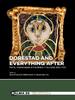
Dorestad and Everything After
Ports, townscapes & travellers in Europe, 800-1100
2025 || Hardcover || Annemarieke Willemsen e.a. || Sidestone Press
Dorestad was the largest town of the Low Countries in the Carolingian era. As an inland port on the edge of the Frankish Empire, it functioned as an international hub, connecting the North Sea World with the Continent and the Low Countries with Italy. In 2024, the National Museum of Antiquities in Leiden hosted its quinquennial international congress based around Dorestad, located at present-day Wijk bij Duurstede. This fourth edition, ‘Dorestad and Everything After’, coincided with the l...
morgen verzonden
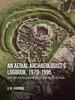
An Aerial Archaeologist’s Logbook, 1970-1995
100 Air Photographs from Northern Britain
2025 || Hardcover || Dennis Harding || Sidestone Press
This volume comprises 100 archaeological air photographs, principally of sites dating to the Iron Age and Roman periods in Northern Britain, resulting from aerial survey between 1970 and 1995, before the advent of drones when archaeological air photography was still dependent upon the use of light aircraft. The principal target areas were the Anglo-Scottish Borders, central Scotland (crannogs) and the Northern and Western Isles (brochs and duns). Practically, in order to maximise intended ...
morgen verzonden
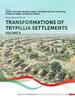
From Ros to Prut
Transformations of Trypillia settlements (volume 2)
2025 || Hardcover || Robert Hofmann e.a. || Sidestone Press Academics
Pre-dating the urban revolution in Western Asia, a network of agricultural settlements developed in the forest-steppe zone northwest of the Black Sea in the late 5th and first half of the 4th millennium BCE, some of which are among the largest prehistoric mega-sites in Europe. These enormous so-called Trypillia communities are unique in many respects, and the dynamics of their formation and their development have long been a topic of intensive research. For more than ten years now, research o...
morgen verzonden
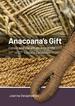
Anacoana’s gift
Cotton and the woven arts of the 11th to 17th century Caribbean
2025 || Hardcover || Joanna Ostapkowicz || Sidestone Press Academics
In the spring of 1497, the Hispaniolan cacica (chieftess) Anacaona presented Columbus’ brother, Adelantado (Governor) Bartolomé Colón, with a lavish assortment of Indigenous wealth, including both woven textiles and balls of spun cotton, “so large that a man could hardly lift them.”
These had been stored among the cacical reserves, held in readiness for distribution in ways deemed useful to the chiefs and their communities – from spun cotton for artisanal commissions, to finished ob...
morgen verzonden
A Social Archaeology of Kinship in Iberia and Beyond
Recent Multistranded Approaches from aDNA to Household Archaeology
2025 || Paperback || Antonio Blanco-González e.a. || Sidestone Press
The study of kinship from archaeology has been fluctuating. At the end of the 20th century archaeologists were reluctant or skeptical about its relevance and viability. However, in recent decades it has gained prominence and today it is experiencing a sweet moment, although not without problems. Its recent impulse has been due to the methodological development of bioscience techniques (aDNA and isotope studies) and to the profound revision and updating of other inference strategies from house...

morgen verzonden
Empire and excavation
Critical perspectives on archaeology in British-period Cyprus, 1878–1960
2025 || Paperback || Thomas Kiely e.a. || Sidestone Press Academics
The modern discipline of archaeology developed in tandem with the expansion of European imperialism in the 19th and 20th centuries. Cyprus, ruled by Britain between 1878 and 1960, is a fascinating example of how archaeology was practiced and developed in a specific colonial context. This volume explores the mechanisms, the institutions and the characters who contributed to the development of Cypriot archaeology, often within a fraught political environment.
The 23 papers in this volume addre...
morgen verzonden
Empire and excavation
Critical perspectives on archaeology in British-period Cyprus, 1878–1960
2025 || Hardcover || Thomas Kiely e.a. || Sidestone Press Academics
The modern discipline of archaeology developed in tandem with the expansion of European imperialism in the 19th and 20th centuries. Cyprus, ruled by Britain between 1878 and 1960, is a fascinating example of how archaeology was practiced and developed in a specific colonial context. This volume explores the mechanisms, the institutions and the characters who contributed to the development of Cypriot archaeology, often within a fraught political environment.
The 23 papers in this volume addre...
morgen verzonden
Advances in Digital Archaeology
Proceedings of the 2023 conference Computer Applications and Quantitative Methods in Archaeology – 50 years of synergy
2025 || Hardcover || Philip Verhagen e.a. || Sidestone Press Academics
This volume showcases cutting-edge research in digital archaeology, presenting 27 chapters that explore how computational methods are transforming archaeological fieldwork, analysis, data management, and interpretation. Topics range from AI applications in artefact classification and spatial modelling, to 3D reconstructions, machine learning, remote sensing, and natural language processing. The contributions highlight the integration of digital tools with archaeological theory, demonstrating ...
morgen verzonden
Mapping Medieval Merv
An Exploration into the Application of Cartographic Analysis and Urban Morphological Theory to an Urban Archaeological Site
2025 || Hardcover || Loren Cowin || Sidestone Press Dissertations
Situated within the vast Karakum desert of western Central Asia, the Merv oasis exhibits a trove of archaeological sites, owing to its rich ancient and medieval history. Likely due to its strategic location along the historic Silk Roads, the oasis boasts no less than three distinct urban sites, each corresponding to a different period.
During the Islamic Golden Age (8th-13th centuries CE), the city of Merv flourished as a significant centre of Islamic scholarship and occasionally served as a ...

morgen verzonden
The eve of destruction?
Local groups and large-scale networks during the late fourth and early third millennium BC in central Europe
2025 || Paperback || Daniela Hofmann e.a. || Sidestone Press
This volume collects papers on the pre-Corded Ware horizon in central Europe and adjacent areas (i.e. from c. 3500 – 2800 BC). This phase is very patchily researched, partly also because certain kinds of evidence, notably domestic architecture and burials, are rare or absent in many regions. This has occasionally been interpreted as signs of a major crisis and population bottleneck, which in turn facilitated the migration of new populations from the steppe, bringing with them amongst others...

