 06 47 6867 72
Gratis verzending vanaf € 20,-

Nederlands
English
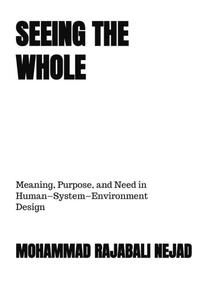


Seeing the Whole begins from a condition that is historically new: human actions now scale beyond intuition. Technologies operate globally, consequences propagate across time and space, and decisions made locally can generate distant and irreversible effects.
In such a world, the way we see matters before anything else.
This book does not offer tools, solutions, or prescriptions. Instead, it asks a more fundamental question: how must we orient ourselves if we are to act responsibly within interconnected systems? It explores why meaning must precede design, why needs are layered rather than singular, how harm propagates through structures, and why responsibility expands with participation rather than intent.
Drawing on systems thinking, human experience, and reflective analysis, Seeing the Whole develops a discipline of attention rather than a doctrine. It introduces the idea of the “cube” not as a technical model, but as a way of resisting one-sided thinking when reality has multiple interacting dimensions.


